
Why Personal Training Delivers Better Results Than Working Out Alone

Most people do not struggle because they lack effort. They struggle because effort without direction is easy to waste.
Walking into a gym alone can feel productive for a while. You choose a few exercises, break a sweat, and leave feeling like you did something. But after a few weeks, progress often slows. The weights feel random. Motivation dips. Minor aches show up. The goal starts to feel farther away than it did on day one.
That is where working with a trained coach changes the experience. Personal training gives structure, accountability, feedback, and a plan that adapts as the body changes. The difference is not just having someone count reps. It is having someone guide the process so each workout has a purpose.

A clear plan beats random effort
Working out alone often starts with good intentions. The problem is that most people build workouts from whatever feels familiar, available, or comfortable that day. That can lead to gaps.
A strong fitness plan balances several important pieces:
Strength training
Mobility work
Conditioning
Recovery
Progression over time
Exercise selection that fits the goal
A coach looks at the full picture. If the goal is fat loss, the plan needs more than hard cardio. If the goal is strength, the plan needs progressive loading and enough recovery. If the goal is moving without pain, exercise choice and technique matter as much as intensity.
This is where personal training stands out. A good coach connects the workout to the outcome. Each session supports the next one, instead of feeling like a separate event.
That matters because the body adapts to repeated, well-planned stress. Doing a little of everything with no clear path can feel busy, but it may not create steady change.
Coaching improves form and reduces wasted reps
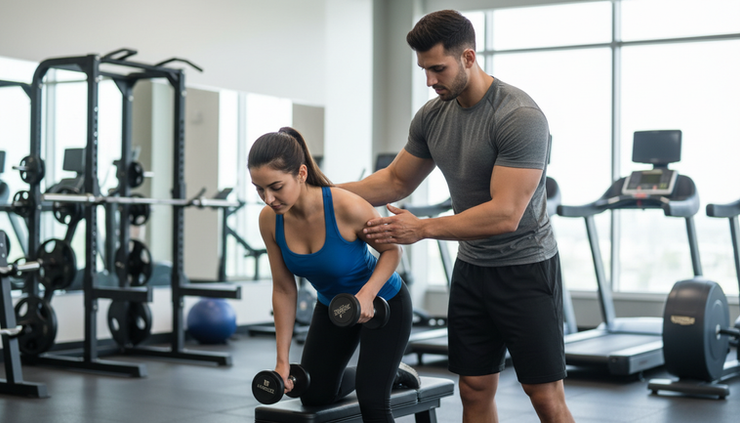
Exercise technique is one of the biggest differences between training alone and training with a coach.
A squat, row, deadlift, lunge, or push-up can look simple from the outside. Small changes in position can make the movement feel very different. Foot placement, breathing, bracing, tempo, range of motion, and control all affect how much benefit the body gets from the exercise.
When working alone, it is hard to see those details in real time. A mirror helps, but it does not catch everything. Video can help too, but only if the person knows what to look for.
A coach can spot issues as they happen, such as:
Knees caving during a squat
Shoulders rising during a row
Lower back arching during a press
Hips shifting during a lunge
Momentum replacing muscle control
Those corrections make workouts safer and more effective. They also help build confidence. When form feels solid, it becomes easier to train harder without guessing.
Accountability changes consistency
Consistency is easy to talk about and hard to maintain. Work gets busy. Sleep suffers. Energy changes. Some days, skipping the gym feels harmless.
The real issue is not one missed workout. It is the pattern that can follow. One missed session becomes two. Two becomes a full week. Then returning feels harder than starting did.
A scheduled session creates a helpful layer of accountability. Someone is expecting the client to show up. Someone knows the goal. Someone notices when effort drops or when life starts getting in the way.
This does not mean a coach should shame or pressure anyone. The best accountability feels supportive, not harsh. It sounds like:
“You had a tough week. Let’s adjust today and keep the habit alive.”
That kind of guidance helps people stay consistent without feeling like they failed. It keeps momentum going, even when the plan needs to bend.
Consistency is often the bridge between wanting change and seeing change. A coach helps protect that consistency.
The right challenge helps the body adapt
Many people train too hard on easy days and not hard enough on the days that should count.
Working alone makes intensity tricky. Some people stop as soon as an exercise feels uncomfortable. Others push every set to the limit and wonder why they feel sore, tired, or stuck. Both approaches can slow progress.
A coach helps find the right level of challenge. That could mean adding weight, slowing the movement down, reducing rest time, changing the exercise, or backing off when recovery is poor.
Progress often comes from small, planned increases. For example, a client may start with bodyweight split squats, then move to goblet split squats, then increase range of motion, then add heavier loads. Each step prepares the body for the next one.
That kind of progression is hard to manage alone because it requires judgment. The workout should feel challenging enough to create change, but not so hard that it breaks down form or recovery.

A coach adapts the plan when life happens
Even the best workout plan needs adjustment. Travel, stress, soreness, injuries, poor sleep, and changing schedules all affect training.
When working alone, it can be hard to know what to do. Should the workout be skipped? Should the same plan be repeated? Should the weight be reduced? Should a movement be replaced?
A coach can make smart changes without losing sight of the goal. If the client’s shoulder feels irritated, pressing may shift to a safer variation. If the client slept poorly, the session may focus on technique and movement quality. If progress has stalled, the plan may need more recovery, not more work.
This ability to adjust is one of the main reasons coached clients often get results more reliably. The plan keeps moving forward, even when conditions are not perfect.
Support builds confidence and better habits
Fitness is not only physical. It also involves decision-making, patience, and trust in the process.
Many people quit because they do not know whether they are doing enough, doing too much, or doing the right things. A coach removes much of that guesswork. Over time, the client learns what good effort feels like, how to warm up, how to choose weights, and how to notice progress beyond the scale.
Progress may show up as:
More energy during the day
Better posture and movement
Heavier lifts with good form
Less fear around gym equipment
Better control during exercises
A more consistent weekly routine
Those wins matter. They make fitness feel less like a short-term project and more like a skill.

Better results come from guidance, not guesswork
Working out alone can absolutely improve health and fitness, especially for people who already know how to train well and stay consistent. But many people reach their goals faster, safer, and with less frustration when they have expert support.
A coach brings the pieces together: a clear plan, better form, steady accountability, smart progression, and adjustments when life gets messy. That combination helps turn effort into progress.
The takeaway is simple. Hard work matters, but directed hard work matters more. When workouts have a purpose and someone is guiding the process, fitness becomes less confusing and far more effective.


Comments